EVENT CREW PLANNING · NORTHERN COLORADO
How Many Event Setup Workers Do You Need?
Crew size should follow the setup volume, access, equipment, and deadline. Counting chairs alone misses the work created by loading routes, assembly, room changes, and teardown.
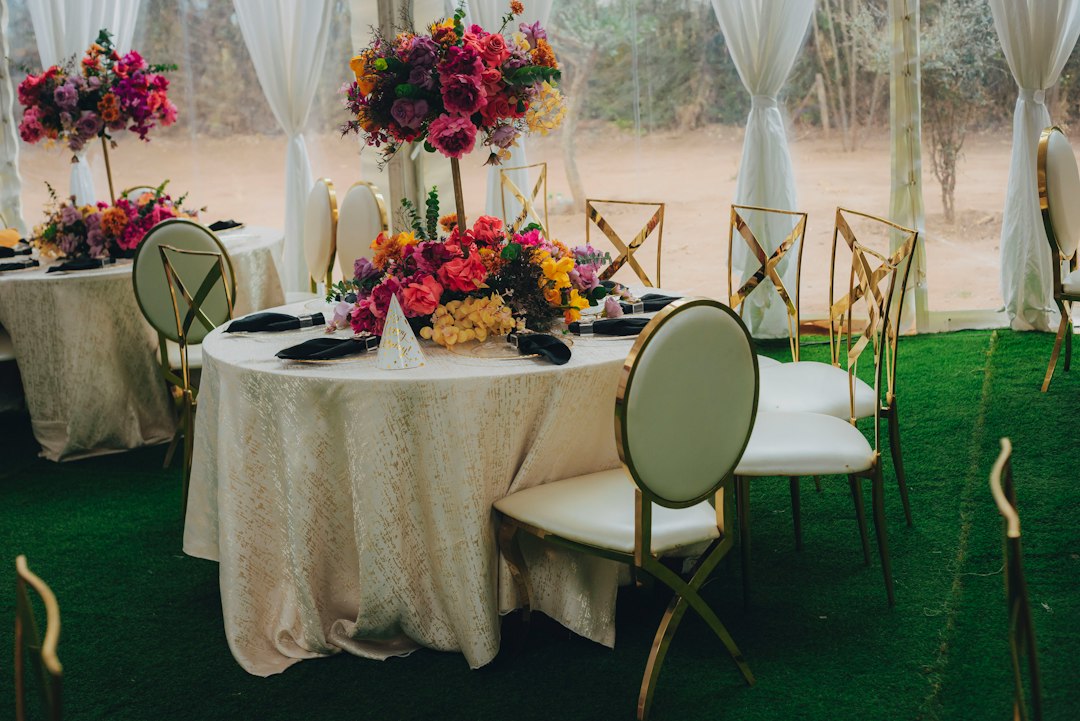
Stock photo: Michael Kyule. Illustrative service image.
Start with the deadline
Work backward from the time the room must be ready for inspection, vendors, or guests. Subtract venue orientation, delivery delays, breaks, and a final correction walk. The time left is the real production window.
A larger crew can help with a short deadline, but only if supplies and instructions are ready when the workers arrive.
Count movable units
List tables by size, chairs, linens, stanchions, signs, décor bins, risers, cases, and waste stations. Add unloading and repacking when those tasks are part of the scope. Note which pieces require assembly or two-person handling.
Use actual counts rather than “one ballroom.” Counts allow a crew to divide the room and identify shortages early.
Measure the access route
Loading dock distance, stairs, elevators, narrow doors, gravel, and shared hallways change productivity. A long carry may benefit from a relay team. A single small elevator may become the bottleneck no matter how many workers are booked.
Send wide photos or a short route video and note required elevator reservations or security check-in.
Separate skilled vendor work
Rigging, electrical work, audiovisual installation, elevated work, specialty staging, and venue-controlled systems may require approved professionals. Do not count a general labor crew as a substitute for licensed or venue-authorized work.
Clarify which vendor supplies tools, supervision, and final approval before labor is scheduled.
Use two people for ordinary small setups
Two workers can be practical for a small room, modest furniture count, open access, and a flexible window. They can move as a pair on bulky pieces while still dividing repetitive work.
Two may be too few when one person must direct vendors or when furniture must move across multiple floors.
Add people for parallel zones
Three or four workers can divide a medium event into unloading, table placement, chair placement, and detail teams. The space must be large enough for those tasks to happen at the same time.
Assign a zone or repeatable job to each person. Without a plan, extra people can create congestion instead of speed.
Plan larger crews around a lead
Five or six workers can help with multiple rooms, a long loading route, heavy volume, or a narrow turnaround. One event lead should give instructions and approve completed zones so the crew does not receive conflicting directions.
Current Front Range Labor planning assumes up to four workers on weekdays and up to six on weekends, subject to availability and the quoted scope.
Include teardown in the estimate
Teardown may move faster than setup, but sorting rentals, saving packing materials, protecting décor, and loading several vehicles take time. Guests and vendors can also restrict routes.
Count the teardown as its own project. Provide the venue deadline, vehicle arrival times, and destination for every item category.
Prepare before the labor window
Provide the final floor plan, room labels, quantities, sample photos, tools, carts, floor protection, and a staging map. Ensure deliveries are on site and the venue is unlocked.
Workers should be able to begin a defined task within minutes of arrival. Waiting for decisions uses the booked window without moving the room forward.
Send details for a flat-rate quote
Include the venue address, date, setup and teardown times, counts, floor plan, stairs or elevators, loading distance, tools, vendor responsibilities, and photos. Mention anything unusually heavy or fragile.
Our $200 minimum applies. Same-day work adds $100 when availability permits. Visit event labor or book a job online.
Need help sizing the event crew?
Send equipment counts, the floor plan, loading route, schedule, and setup photos. Our team will review the work and send a flat-rate quote.
FRONT RANGE LABOR
Your second set of hands. Labor-only help across Northern Colorado.
cole@frontrangelabor.com · 970-373-0339
Service-area business. No customer visits. © 2026 Front Range Labor LLC.